
Letting go of anger
I meet people in their most challenging times, when they feel that life is totally meaningless and someone has put off the lights to their joy. This is normal and expected when being admitted to a psychiatric hospital, however as time passes and as people start moving through the healing process you can almost see the light returning to their eyes. I have become quit accustomed to this process of ebb and flow in emotions, however this week I was hit by the worst emotions of them all in this ebb and flow process – Anger!
Not that it is very surprising – you see anger is an easy emotion, therefore whenever we feel totally overwhelmed and have no idea what we are feeling or what to do with this flood of emotions we turn to our ‘primal brain’ for guidance thus pure and unrivaled emotions come spilling out of us in the form of anger. The problem with anger being such an easy and strong emotion is that after some time it becomes the ‘go-to’ emotion and anger starts being the dominant emotion in all things.
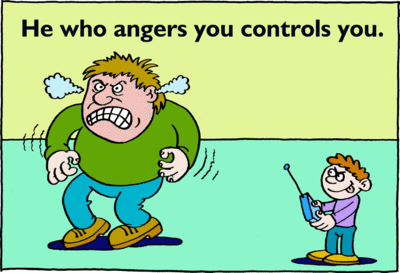
Firstly we need to understand that dealing with what caused you anger and managing the emotion itself are two very separate things and should be dealt with as such. Just because you may no longer be angry does not mean the problem has been resolved and just because the problem has been resolved does not mean you’re no longer angry. Here are a few tips to remember when you get angry.
- Tame the emotion – anger is a good motivator, but a bad teacher. It is not always a bad thing to get angry, it is however a bad thing, or at least may lead to a bad thing, when we are unable to control that anger. The key in managing anger is to not allow the emotion to get the better of you. Therefore, when you get angry take a time out, count to ten, or scream into a pillow. Any activity that allows you to get the ‘sting’ of the emotion out so that it does not rule your actions will be very helpful.
- Why are you angry? – Anger is nothing more than an outward expression of hurt, fear and frustration, this is why we snatch up anger; it is easier to be angry then deal with the true more uncomfortable emotions. Understanding why you are angry will allow you to address the situation in a more acceptable manner. Activities that might help with this is to wright down what you think the problem is, explore the other emotions you are feeling apart from the anger, journal, establish if there may have been a boundary infringement. Ask yourself if your anger is rational, if it is based on facts or assumptions, and if you think about it differently does it affect you anger?
- Express your anger – “Speak when you are angry and you will make the best speech you will ever regret” – Ambrose Bierce. Yes, expressing your anger is an important step in dealing with anger, however expressing you anger in the wrong way is not. When you are calm and have taken control of your anger, express your frustration in an assertive but no confrontational way. Making use of an ‘I message’ may be very helpful in this regard as it allows you to state your concerns and needs clearly and directly, without hurting others. This will also help you to think before you speak, avoiding those ‘in the heat of the moment’ statements we are unable to take back.
- Have anger rules – it is often said that anger is a state of temporarily madness. This is because we do not always think when we are angry, we are driven by our emotions and engage in behaviors we may regret later. Having anger rules will help you prevent these spur of the moment, emotional driven outburst. These can be very simple rules i.e. do not interact with others when you are very angry, avoid using derogative terms, choose the right time and place to talk about your anger, don’t run away from the problem give yourself some time to cool off, but come back and deal with it. Whatever your rules are make them before hand and stick to them when you do get angry.
- Manage little angers – Prevention is always better than cure, therefore learn to manage your frustrations and small angers before they get out of hand. You can do this by regularly taking stock of your emotions, regularly exercising, tanking small breaks throughout your day to make sure you don’t get too overwhelmed, improving life skills like communication, conflict management, and assertiveness.
I leave you with this “Nobody makes you angry; you decide to use anger as a response – Brian Tracy. Therefore, choose wisely.
